


.png)
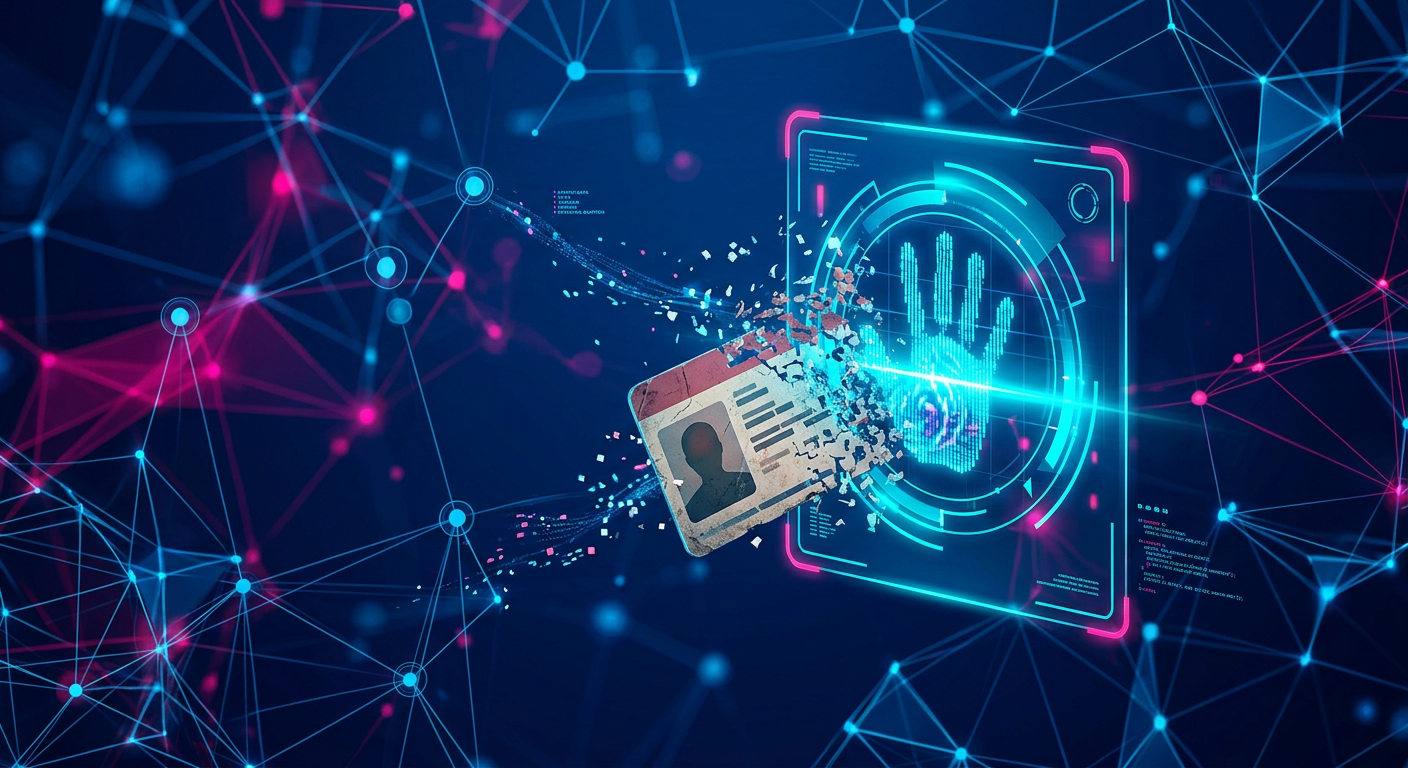
TL;DR: McLovin's ID had at least six detectable flaws. Modern AI-powered document verification catches all of them automatically, and usually within seconds.
A nervous teenager hands a clerk a Hawaiian driver's license with a single name, McLovin. Just McLovin, a 25-year-old organ donor from Honolulu.
The 2007 film Superbad turned that scene into pop culture gold. Seventeen years later, McLovin's ID still shows up on dorm room posters, Halloween costumes, and meme threads. But here's what those threads rarely discuss: just how catastrophically bad that fake ID really was, and how modern identity verification technology would catch something like it in milliseconds.
This post breaks down every flaw in McLovin's fictional ID, explains the very real legal consequences of using a fake, and explores how AI has made the entire fake ID game essentially unwinnable in 2025.
The McLovin Backstory: Why This ID Became Iconic
Superbad follows three high school seniors trying to score alcohol for a party before graduation. The plan hinges on Fogell, the most nervous member of the trio, who has obtained a fake Hawaiian driver's license. When his friends finally see it, the reveal is devastating: the ID lists only the name "McLovin," a birthdate placing him at 25 years old, and a photo that strains all credibility.
What follows is a series of escalating misadventures. The ID becomes less a tool and more a running punch line.
The genius of the scene is that it nails something true about teenage logic: the confidence that a plan is airtight until the moment it obviously isn't. McLovin's ID is funny *because* it's so bad, and yet Fogell believes in it completely.
Breaking Down McLovin's ID: Six Flaws That Would Kill It Instantly
The ID works in the movie because the plot needs it to. In the real world, a trained verification agent, let alone an AI system, would flag it before the receipt was printed.

Flaw 1: A Single Mononymous Name
The most obvious red flag: no first or last name. Just McLovin.
While mononymous individuals exist, they are exceedingly rare on government-issued ID. Every US state's DMV requires both a legal first and last name. A single-field name triggers an immediate manual review flag in any document processing system.
Even if someone legally changed their name to "McLovin," the formatting on the ID itself would still need to reflect the state's field conventions. It doesn't.
Flaw 2: Date and Validity Discrepancies
The ID lists an issue date of 06/18/1998 and an expiration date of 06/03/2008. Hawaiian driver's licenses have a maximum validity of 8 years. A ten-year window is an automatic disqualification.
Modern document fraud detection systems are trained on the exact validity rules for every US state and dozens of international jurisdictions. This mismatch would be caught instantly.
Flaw 3: Wrong License Number Format
Authentic Hawaiian driver's licenses follow a specific alphanumeric pattern: the letter "H" followed by eight digits. McLovin's license deviates from this entirely.
License number format validation is one of the first checks any document scanner runs. No match to the state's known format.
Flaw 4: Missing or Fake Security Features
Real driver's licenses are designed to be extremely difficult to counterfeit. They include:
- UV-reactive holograms that shift under different light
- Microprinting invisible to the naked eye
- Laser-engraved personal data embedded in the card
- RFID chips (on newer licenses) storing encrypted biometric data
A fake ID printed on standard materials would fail a UV light test in seconds, something any bouncer with a $20 scanner can perform.
Flaw 5: Barcode and Magnetic Strip Failures
Modern IDs store personal data in machine-readable formats: a 2D barcode on the back and/or a magnetic strip. The data encoded must match the printed fields exactly.
Any ID scanner, including the inexpensive models used at most bar entrances, reads and cross-references this data. A fake ID with a blank, corrupt, or mismatched barcode fails immediately. Even a perfectly printed fake will fail the machine test.
Flaw 6: Photo Credibility
This is the subjective one, but it matters. Fogell looks like a teenager. McLovin is supposedly 25. Human reviewers are trained to compare the apparent age of the photo against the listed birthdate. AI face verification systems now do the same with sub-second precision, flagging biometric inconsistencies that a tired bartender might miss.
The Legal Reality: What Actually Happens When You Use a Fake ID
Depending on the state, using or possessing a fake ID can result in:
- Criminal misdemeanor or felony charges (identity fraud, forgery, or document fraud)
- Fines ranging from $500 to $10,000+
- Jail time up to one year for misdemeanor charges; longer for felonies
- License suspension, the real one
- A permanent criminal record that affects college admissions, employment background checks, and professional licensing
For businesses, accepting a fake ID can mean losing their liquor license, facing civil liability, and, in some jurisdictions, criminal charges for the employee who accepted it.
The New Threat: AI-Generated Fake IDs
McLovin's ID was a badly printed piece of cardstock. Today's fake IDs are different. Platforms like OnlyFake (which emerged in 2024) demonstrated that AI image generation could produce photorealistic fake IDs for dozens of countries and US states, for as little as $15.
These AI-generated fakes can fool the human eye. They replicate holograms, fonts, and layouts with high fidelity. They're designed to beat optical inspection.
But they still fail the deeper verification layers, and that's where modern AI detection systems have the upper hand. The detection of OnlyFake-style AI-generated IDs is precisely the arms race that's accelerating investment in document fraud detection.
How AI Fights Back: Modern Fake ID Detection
The same technology that makes fake IDs better also makes detection more powerful. AI-driven identity verification has moved far beyond what a bouncer with a black light can do.
Advanced Document Fraud Detection
AI-powered document fraud detection systems and broader Intelligent Document Processing pipelines perform pixel-level analysis on submitted documents.
This includes:
- Detecting clone-stamp, splice, or generative fill edits
- Checking font consistency against known templates for each issuing authority
- Verifying microprint, holograms, and security pattern placement
- Identifying compression artifacts consistent with re-saved or digitally manipulated images
These systems are trained on massive datasets of authentic and fraudulent documents from every major jurisdiction. McLovin's ID would fail multiple checks before a human ever reviewed it.
Real-Time Database Cross-Referencing
Data extracted from the document (name, DOB, license number, state) is cross-referenced against government databases and public records in real time.
If McLovin's license number doesn't exist in Hawaii's DMV records, that's an instant flag. If the address doesn't correspond to a valid location, another flag. If the name-DOB combination matches no record anywhere, the system escalates for review.
Facial Recognition and Liveness Detection
Face verification systems compare the photo on the submitted ID to a live selfie or video. But more importantly, liveness detection ensures the person isn't holding up a printed photo or using a pre-recorded video. And deepfake detection systems catch AI-generated face swaps that might otherwise fool a camera.
Behavioral and Contextual Signals
Advanced KYC platforms also analyze submission metadata: device fingerprinting, submission timing, geo-IP consistency with the claimed address, and behavioral patterns during the verification flow. These signals catch fraud attempts that document analysis alone might miss.
Industries Where This Actually Matters
The stakes are highest in:
- Financial services: KYC failures can result in regulatory fines in the millions
- Crypto platforms: Required to verify user identity for AML compliance
- Online alcohol and cannabis retail: Age verification is legally mandated
- Healthcare: prescription fraud and insurance identity theft
- Gaming and gambling: Both age compliance and fraud prevention
- Dating apps: Safety verification and age-gating
Any platform that onboards users remotely has a fake ID problem.
Conclusion
McLovin's ID is a comedy relic. Nearly two decades later, it still makes people laugh.
But the real-world landscape it parodies has changed completely. What was a plot device in 2007 is now a serious fraud vector, and the countermeasures have scaled accordingly. AI-powered verification systems can catch every flaw in McLovin's ID before the clerk even looks up from the scanner.
For organizations handling identity verification, whether in banking, fintech, age-gated commerce, or any other regulated space, the question isn't whether to adopt AI-driven document fraud detection. It's whether to do it before or after a compliance incident.
Fogell got lucky. Your verification pipeline shouldn't have to.
Share this post


Table of contents
Low-Code AI Automation Starts Here – Try Arya Apex


.png)




.png)
.png)
.svg)


