


.png)

Autonomously executing tasks: this is the promise of agentic AI. It could easily attract enterprises looking to innovate and cut costs. However, a shocking Gartner analysis found that 40% of agentic AI projects are expected to be cancelled by 2027.
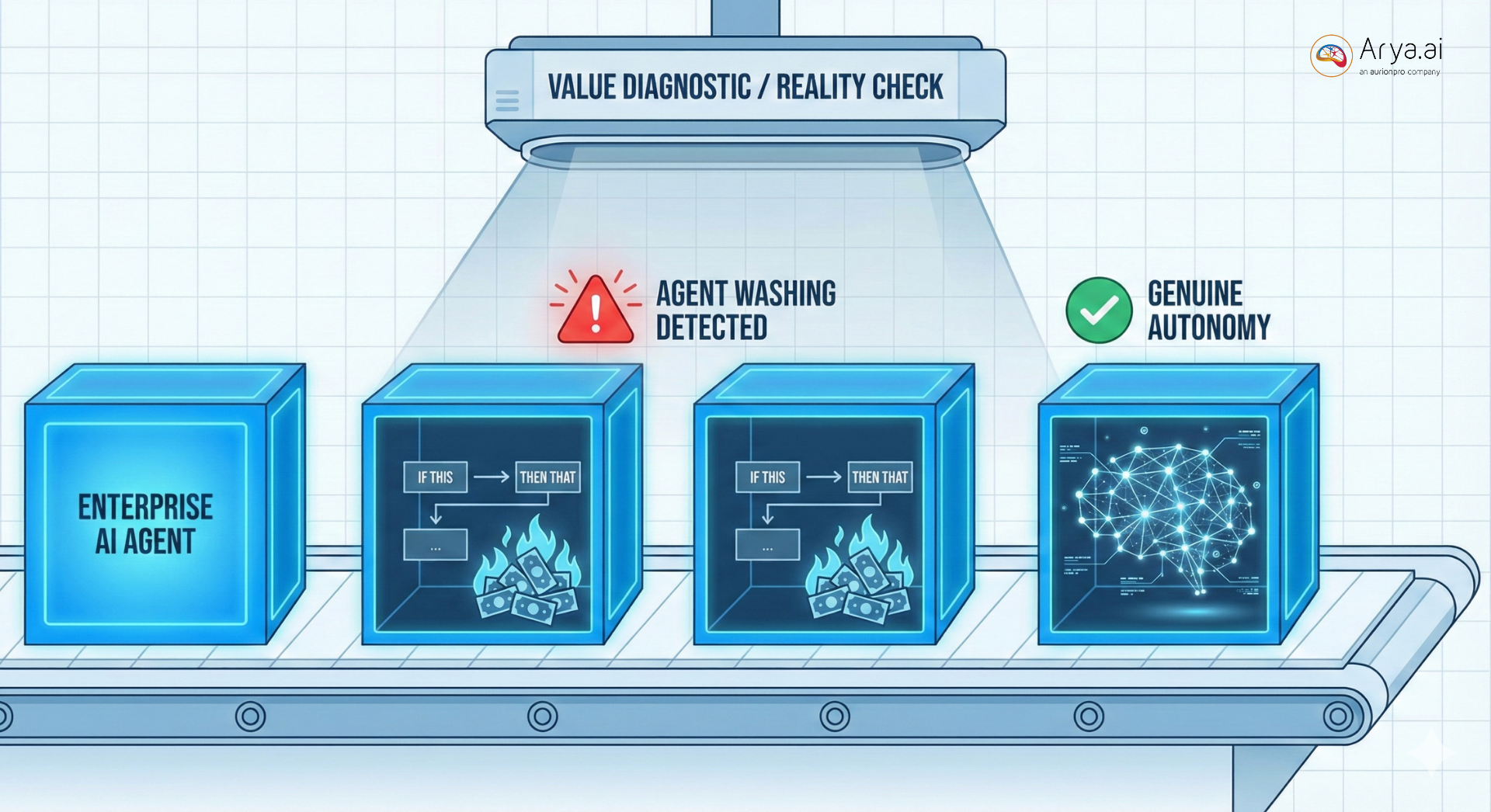
Why should something that is expected to be the next frontier of automation be cancelled? The discontinuation of most agentic AI projects is largely due to unclear business value and escalating costs. More importantly, enterprises want to jump on the bandwagon due to the fear of missing out, but moving from a clever prototype to a production-ready system has proven far more complex and costly than expected.
The technology, use cases, and flawed propositions have created an environment where understanding what AI agents can and cannot do is difficult. This makes it critical for businesses to distinguish genuine opportunities from hype.
What is Agent Washing?
Agent washing takes its name from green washing in sustainability. It is now a growing problem in the AI marketplace, where some vendors mislabel or rebrand their products (AI assistants, chatbots, or RPA tools) as agentic AI without providing true agent capabilities. This tactic is meant to ride the hype wave around AI agents. As with any hype, such misrepresentation of capabilities is inevitable.
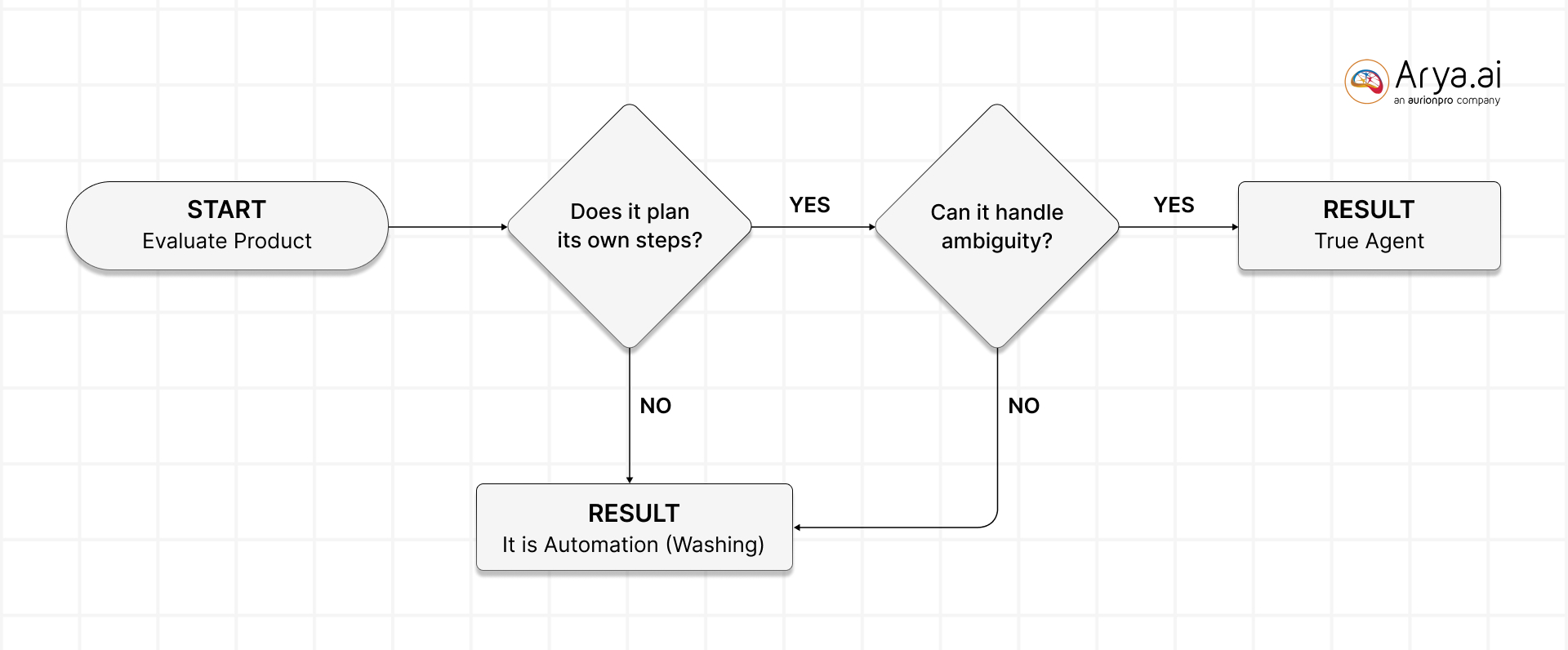
But what is alarming is that enterprises are unable to discern real innovation from marketing spin. This creates a landscape where leaders invest in such tools and bank on their capabilities to complete the tasks, and when these tools don’t live up to their expectations, skepticism grows.
How to Spot Agent Washing?
With the market moving so fast, distinguishing between a true autonomous agent and a rebranded legacy tool requires a sharp eye. Marketing materials often blur these lines, using advanced terminology to describe basic automation. To ensure you are investing in genuine innovation rather than just a label, you need to look past the sales pitch and inspect the underlying mechanics.
Here are the key red flags and warning signs that an “AI agent” offering might be more hype than reality:
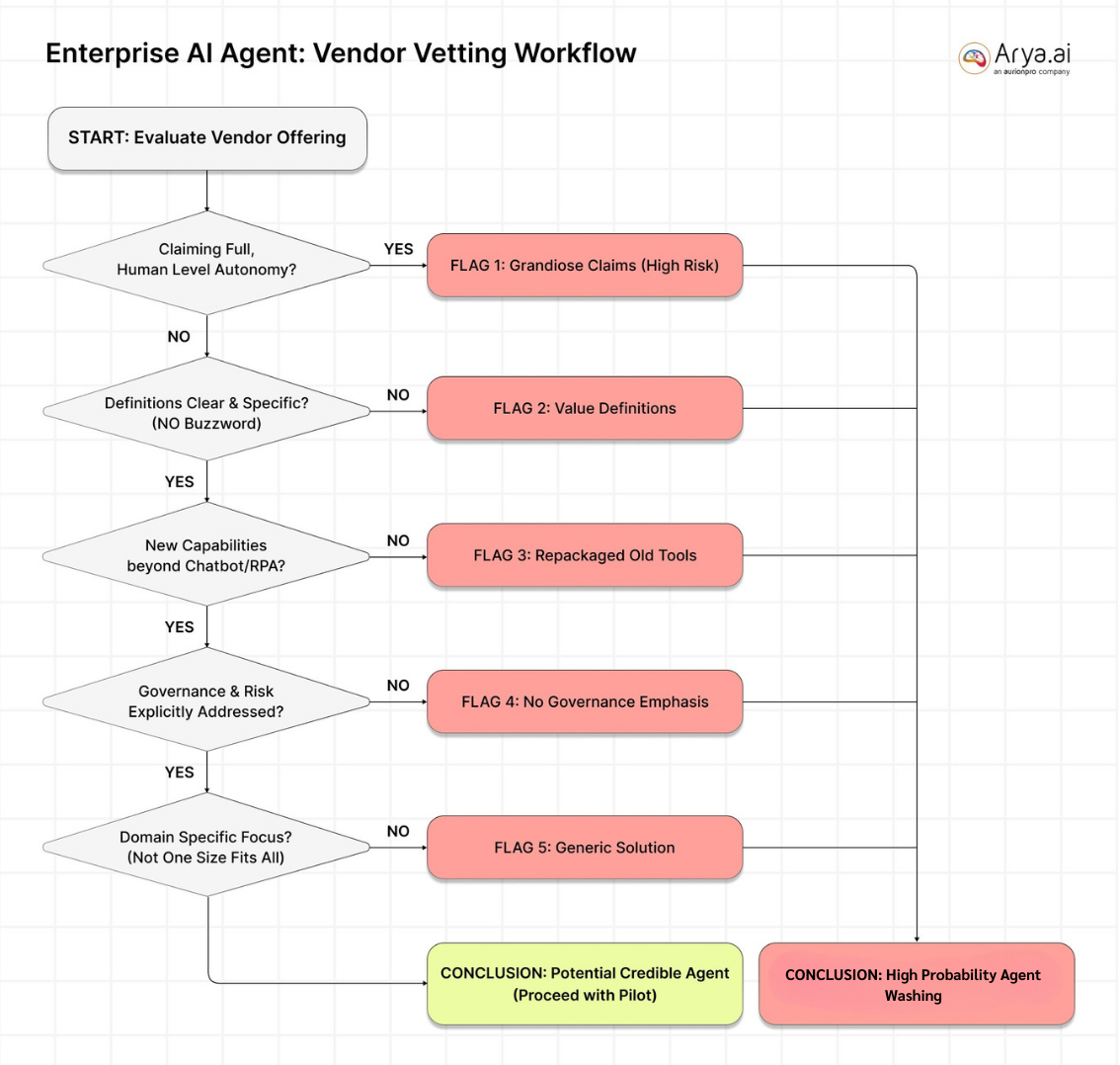
- Vague Definitions of the Capabilities: Organizations must press vendors to define what they mean by “agent” and detail the agent’s capabilities. If the explanation is all buzzwords and no substance, the product could be merely a rebranded chatbot.
- Grandiose Claims of Full Autonomy: No current AI agent is truly fully autonomous in an enterprise context. If a vendor insists their agent can completely run on its own with human-level decision making, that’s a major red flag.
- Repackaged Old Tools: A lot of agent washing involves taking familiar technologies (chatbots, digital assistants, simple RPA scripts) and slapping the “autonomous agent” term on them without adding new capabilities.
- No Emphasis on Governance: Listen to how the vendor addresses risk and control. An authentic enterprise AI agent offering will acknowledge issues like security, access control, error handling, and compliance.
- Beware of One-Size-Fits-All Solutions: Agentic AI is an emerging field, and credible providers will usually focus on specific domains or problem types (document fraud detection, customer onboarding, etc).
Agentic AI’s Struggle for Scale and Consistency
Moving from a controlled pilot to enterprise-scale deployment is often where the cracks begin to show. While it is relatively easy to build an agent that works well in a demo, ensuring that same agent performs reliably across thousands of interactions is a different class of problem. The infrastructure and oversight required to support genuine autonomy are far more demanding than traditional software.
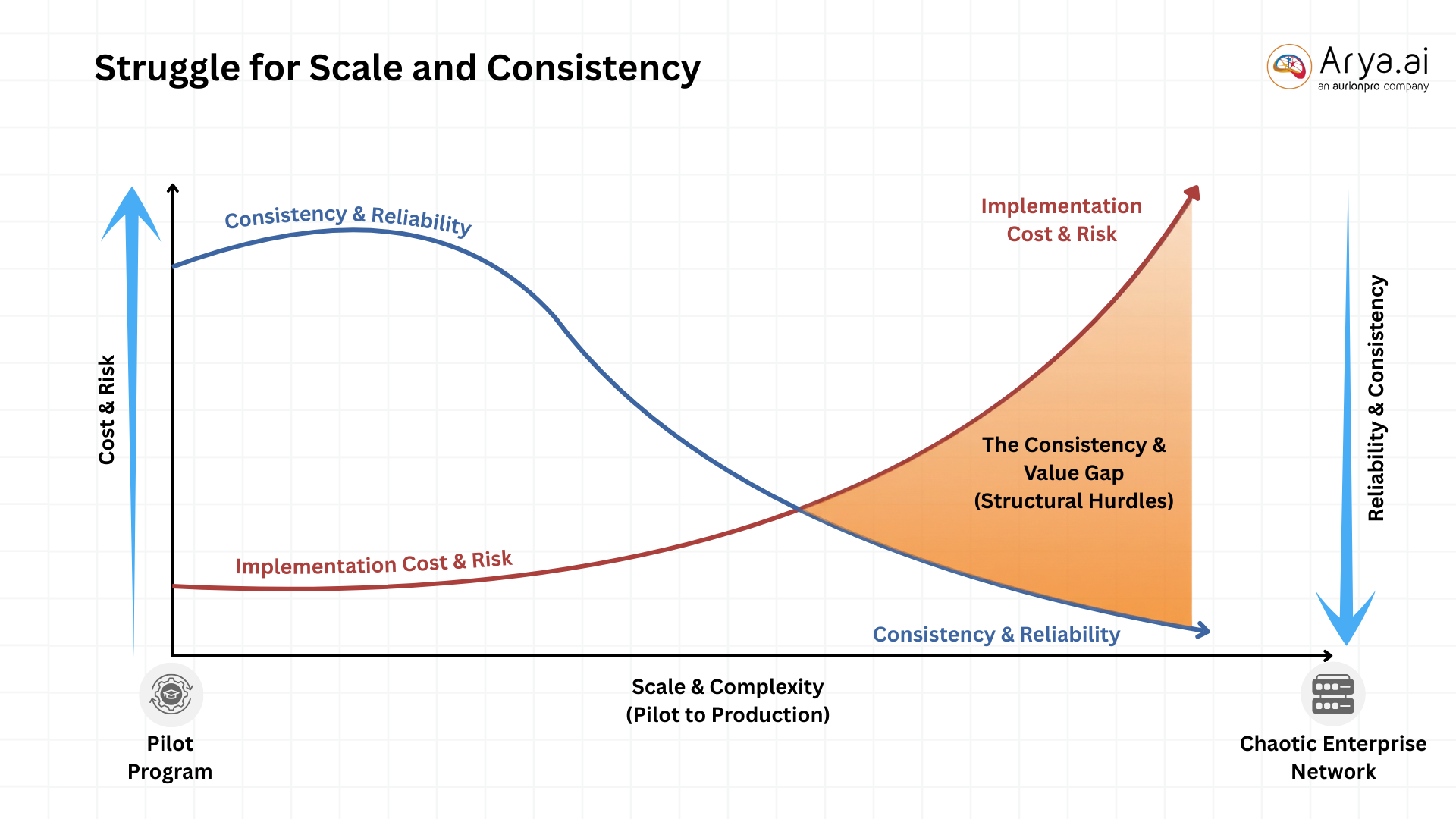
As a result, even well-intentioned projects frequently stall due to structural hurdles, such as:
High Implementation Costs: Deploying AI agents involves complex models, integration with multiple systems, and extensive training data, which often costs more than anticipated. At the same time, businesses are finding it hard to pin down a clear business value for AI agents. Unlike straightforward automation, an agent’s ROI can be fuzzy if you haven’t identified the right use case.
Complete Autonomy Presents Risks: An autonomous AI agent will make decisions or take actions on its own. This can introduce risks, from decisions that are subject to compliance and security concerns, especially when sensitive information is shared. If enterprises rush into agentic AI without putting guardrails in place, the results cause the higher-ups to pull the plug.
Technical Immaturity: Today’s agents are often brittle outside narrow scenarios. Studies have shown current AI agents failing at seemingly simple multi-step tasks about 70% of the time . Such performance gaps make it hard to justify scaling up agents for critical processes.
Hype Driven Misalignment: Finally, the flawed perception about the technology dooms many projects from the start. When an organization pursues an AI agent because “everyone is doing it” or because a vendor pitched a miracle solution, trouble follows. Early-stage enthusiasm can give way to disappointment when an agent project doesn’t easily fit into existing workflows or fails to deliver quick wins.
All these factors explain why so many agentic AI initiatives stall out before delivering real value. When you connect the dots, Gartner’s analysis doesn’t sound so shocking.
How to Navigate the Hype?
Spotting hype is only half the battle. The other half is how organizations should approach agentic AI in a prudent way. Here are some best practices to avoid the pitfalls of agent washing and get real value from AI agents:
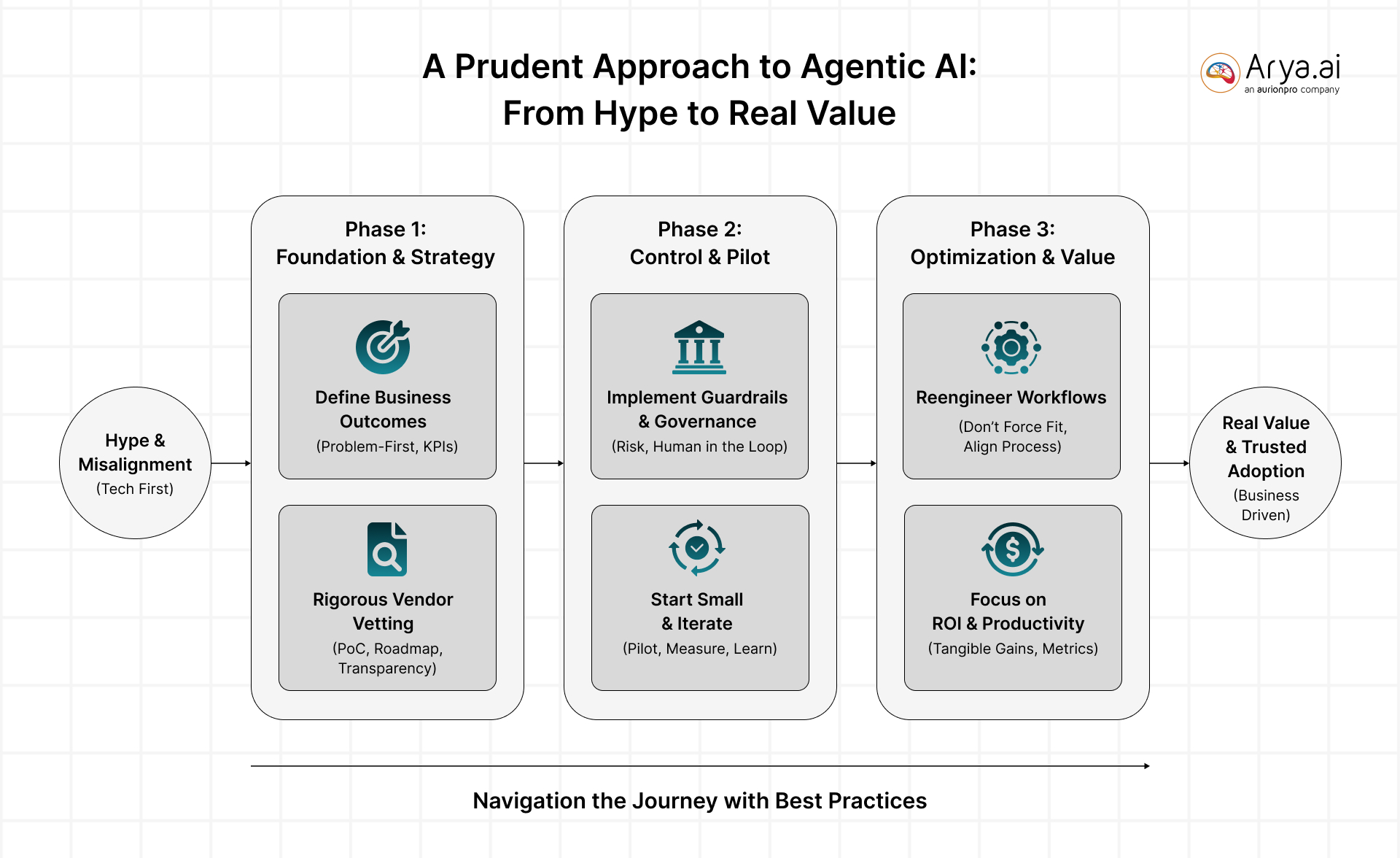
Define Clear Outcomes:
Before you even consider AI agents, identify the business problem or opportunity you aim to address. Avoid the technology-first approach. Many failed projects began with “let’s use an AI agent for something” rather than a defined goal, leading to misalignment.
Instead, pin down use cases where autonomy could truly make a difference – e.g. reducing customer onboarding time or automatically generating credit memos. Define what success looks like (KPIs, cost savings, etc.) up front. This ensures the project is driven by business value, not just hype.
Vet Vendors Rigorously:
If you’re evaluating third-party AI solutions, do due diligence. Demand demonstrations and proof-of-concept trials in your environment. As mentioned earlier, don’t accept marketing claims at face value. It’s crucial to test the agent on realistic tasks and edge cases.
Evaluate the vendor’s roadmap and ask about critical factors like security, identity management, and integration capabilities. A legitimate provider will be transparent about what their agent can and cannot do today, and how they are working to improve it.
Implement Guardrails and Governance:
To avoid being part of the “inadequate risk control” statistic, build proper oversight into any agentic AI initiative. This means setting boundaries on what the agent is allowed to do, establishing human-in-the-loop checkpoints for high-impact decisions, and monitoring the agent’s actions.
Ensure compliance and security teams are involved early to address concerns (for instance, an agent that can access sensitive data should be thoroughly reviewed). Having strong governance from day one will prevent unpleasant surprises and build trust that the AI is behaving as intended.
Start Small and Iterate:
Rather than a big-bang rollout of dozens of AI agents enterprise-wide, begin with a focused pilot. Pick a contained use case where an agent could add value, and trial it in a controlled setting. Measure the results, like did it actually save time or improve outcomes? Use those lessons to iterate.
It’s better to achieve a modest success (or catch a flaw) in a pilot than to deploy at scale and fail broadly. Many organizations are wisely taking a cautious approach. According to Gartner’s analysis, only 19% had made significant investments in agentic AI, while the majority are experimenting conservatively or waiting to see more proof. This phased approach helps manage risk and allows the technology to mature a bit more.
Don’t Force-Fit, Reengineer if Needed:
Avoid simply bolting agents onto existing processes just to tick an innovation box. If you have a clunky legacy workflow, dropping an AI agent into it may create more chaos than benefit. Instead, redesign the workflow (where possible) to play to an AI agent’s strengths.
Identify points in the process where autonomous decision-making or action could clearly add speed, quality, or cost efficiency, and redesign around that. Success will come from tightly aligning the technology with strategic business outcomes, not from superficial integration. In some cases, you might find simpler automation or traditional software is sufficient, and an “agent” isn’t needed. Use the right tool for the job.
Focus on Productivity and ROI:
Keep your eyes on tangible results. The goal should be enterprise productivity gains or cost/quality improvements, not just cool tech for its own sake. For example, if an AI agent is deployed to assist with IT helpdesk tickets, track metrics like reduction in resolution time or workload offloaded from humans.
If those metrics aren’t moving the needle, reassess the approach. Many so-called agent use cases today don’t actually require full agent autonomy and could be solved with simpler AI or automation. Be willing to dial down complexity if it means a more effective solution.
Conclusion
Agentic AI holds great promise with regards to how work gets done, from automating complex workflows to making intelligent decisions at machine speed. But in this early stage, it’s a field rife with hype, inflated claims, and half-baked solutions. Agent washing has emerged as a real risk, with the majority of vendors marketing “AI agents” that aren’t truly capable, and a majority of projects at risk of failure due to misaligned expectations and poor preparation.
For enterprise leaders, the mandate is clear: approach agentic AI with clear-eyed pragmatism. By rigorously vetting claims, insisting on business value, and putting the right controls in place, organizations can avoid being duped by marketing buzz.
At the same time, those who cut through the hype and invest wisely in genuine solutions will be poised to reap the benefits when autonomous agents come of age. Early adopters who demand results (and hold vendors and internal teams accountable to those results) will build the experience needed to capitalize on agentic AI as it improves.
If you’d like to discuss your specific use cases or just have questions about your AI roadmap, feel free to reach out to us.
Share this post


Table of contents
Low-Code AI Automation Starts Here – Try Arya Apex


.png)




.png)
.png)
.svg)


